
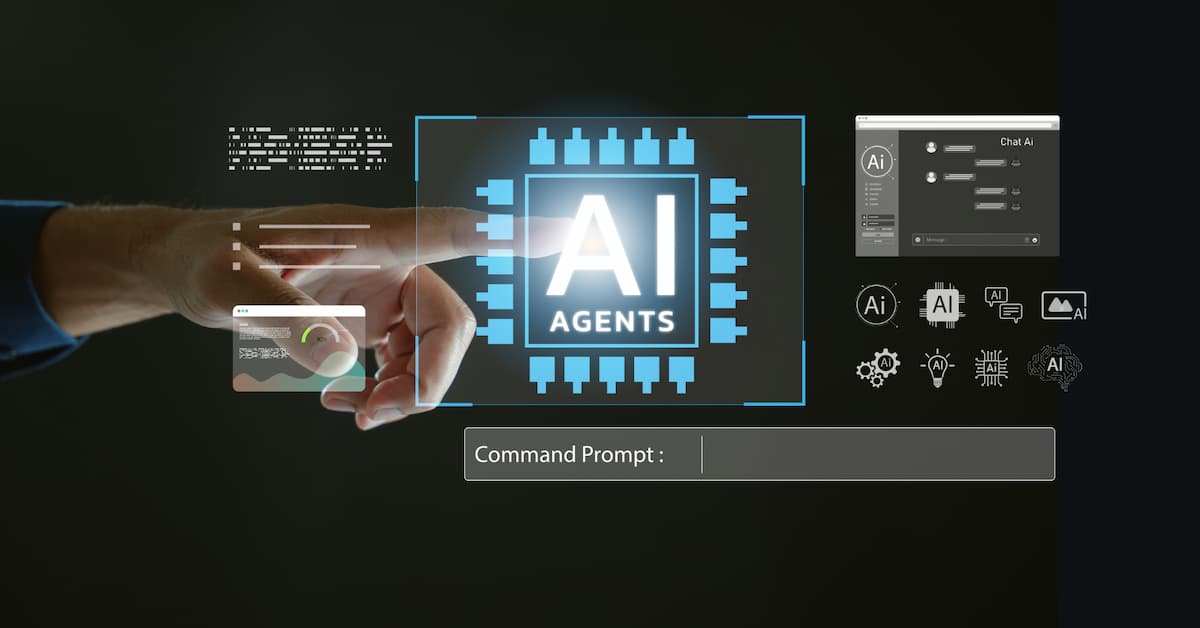
The most time-consuming work in most businesses is not physical. It is the constant cycle of reviewing information, making decisions, routing approvals, updating records, and coordinating between systems and people. This is knowledge work, and for decades it has resisted automation because it requires judgment, not just repetition. AI agents and intelligent workflow tools are changing that. Businesses can now automate complex, decision-dependent processes that previously required dedicated staff to manage manually. Allied Business Solutions helps organizations implement knowledge work automation and business workflow automation services that reduce overhead, eliminate bottlenecks, and free teams to focus on work that requires genuine human expertise.
What Is Knowledge Work Automation and How Is AI Driving It?
Knowledge work automation is the use of technology to handle tasks that involve processing information, applying rules or judgment, and coordinating action across people and systems. Unlike traditional automation, which excels at repeatable physical or data-entry tasks, knowledge work automation targets the cognitive layer of business operations.
AI is the engine making this possible. Earlier workflow tools could follow rigid, pre-defined rules. AI agents can interpret context, handle variation, and make decisions based on learned patterns rather than hardcoded logic. That distinction matters enormously in real business environments where conditions change, exceptions occur, and no two situations are exactly alike.
Core capabilities that AI brings to knowledge work automation include:
- Natural language understanding: AI agents can read, interpret, and act on unstructured information from emails, documents, messages, and forms without requiring data to arrive in a specific format
- Adaptive decision-making: Rather than breaking down when a situation falls outside a predefined rule, AI models evaluate context and select the most appropriate response based on learned behavior
- Cross-system orchestration: AI agents connect to multiple platforms simultaneously, pulling data from one system, applying logic, and pushing outputs to another without human coordination at each handoff
- Continuous learning and improvement: As AI agents process more transactions, they refine their accuracy and expand their ability to handle edge cases that previously required escalation to a human
Platforms like M-Files workflow management sit at the intersection of document management and process automation, giving businesses a structured environment to build, deploy, and manage AI-powered knowledge workflows without requiring custom development at every step.
How Can Automated Workflows Reduce Operational Bottlenecks?
Bottlenecks in business processes almost always share the same root causes: information waiting on a person, a person waiting on information, or two systems that do not communicate without manual intervention. Automated workflows target each of these failure points directly.
Eliminating Approval Delays
Approval processes are among the most common sources of operational delay. A contract waiting for a signature, an invoice pending manager review, or a new vendor pending compliance clearance can sit idle for days if the process depends on someone remembering to act. Automated workflows route approval requests instantly, send reminders on a defined schedule, escalate to the next approver when a deadline passes, and log every action taken. What previously took a week can often be completed in hours.
Removing Manual Handoffs Between Systems
Every time an employee manually transfers data from one system to another, there is an opportunity for error and a delay built into the process. AI agents & workflow tools connect systems directly, triggering actions in downstream platforms the moment an upstream condition is met. A completed intake form can automatically create a client record, generate a task, send a confirmation, and update a dashboard without a single manual step.
Handling Exceptions Without Derailing the Whole Process
Automated workflows do not just accelerate the easy cases. They manage exceptions intelligently by identifying when a transaction falls outside normal parameters and routing it to the appropriate person with the relevant context already assembled. Instead of a staff member hunting down background information to resolve an issue, the workflow delivers everything needed to make a decision in a single notification.
Standardizing Inconsistent Processes
Many operational bottlenecks are not caused by volume but by inconsistency. Different employees handle the same process differently, creating unpredictable outcomes and making it difficult to identify where delays originate. Automated workflows enforce a consistent path for every transaction, making processes measurable, auditable, and far easier to improve over time.
What Industries Benefit Most from AI-Powered Process Automation?
While knowledge work automation delivers value across virtually every business function, certain industries see disproportionately high returns due to the volume, complexity, and compliance requirements of their document and decision-intensive operations.
Healthcare
Healthcare organizations manage extraordinary volumes of patient records, insurance authorizations, billing documents, referrals, and compliance filings. AI-powered automation accelerates prior authorization workflows, reduces billing errors, streamlines patient intake, and ensures that records are routed and retained in accordance with HIPAA requirements. Staff spend less time on administrative tasks and more time on patient care.
Legal and Professional Services
Law firms and professional services organizations deal with contracts, matter files, client correspondence, and billing records that require precise handling and strict version control. Automated workflows manage document routing, deadline tracking, approval chains, and client communication triggers with an accuracy and consistency that manual processes cannot reliably sustain at scale.
Finance and Accounting
Accounts payable, expense management, financial reporting, and audit preparation all involve high volumes of structured and unstructured data moving between people and systems on tight timelines. Business workflow automation services in finance reduce processing time for invoices and approvals, improve reconciliation accuracy, and automatically generate audit trails.
Education
Educational institutions manage enrollment documentation, accreditation records, faculty approvals, and compliance reporting across departments that often operate with limited administrative staff. Automation reduces the manual burden on those teams while improving consistency and response times for students and faculty.
Manufacturing and Distribution
Supply chain coordination, purchase order processing, vendor compliance documentation, and quality control records are all strong candidates for knowledge work automation. AI agents can monitor incoming documentation, flag discrepancies, and trigger procurement or quality workflows without waiting for a staff member to manually review each transaction.
Modernize Your Business Processes with Allied Business Solutions
Knowledge work automation is no longer a capability reserved for enterprise organizations with large IT budgets. Allied Business Solutions helps small and mid-sized businesses implement AI agents and workflow automation tools, including M-Files workflow management, that reduce operational overhead and create scalable, repeatable processes across every department.